
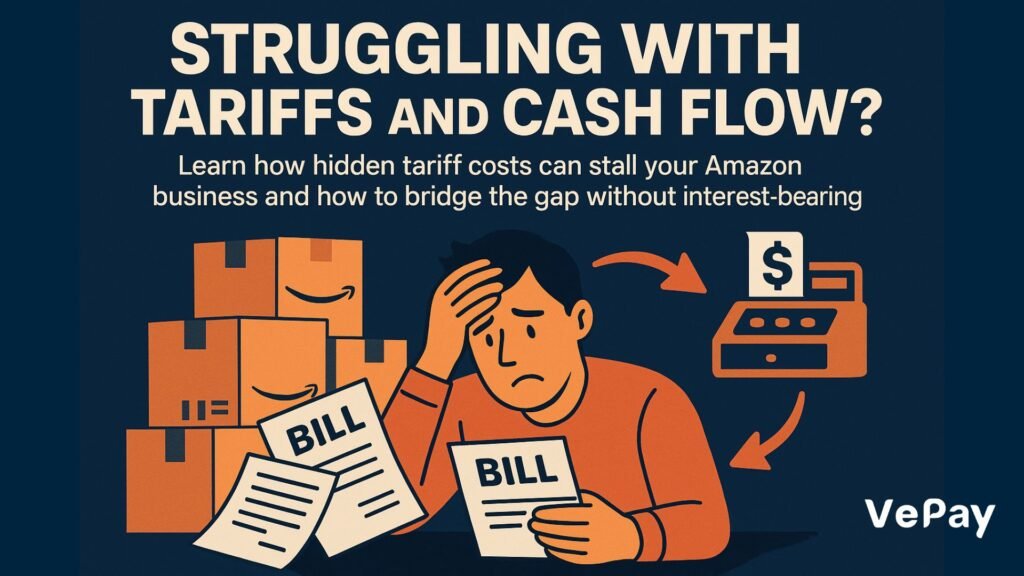
The Invisible Drain on Your Amazon Business
Many Amazon sellers meticulously track sales, optimize listings, and manage inventory, yet often overlook a critical financial vulnerability: the hidden costs of international trade and the inherent delays in the e-commerce payment ecosystem. These factors, seemingly disparate, converge to create significant cash flow strain. This report will delve deep into how tariffs, complex import processes, and Amazon’s unique payment cycles combine with extended global supply chain lead times to create a substantial gap between upfront expenses and actual revenue inflow. Understanding this “cash flow chasm” is the first step toward implementing strategic solutions that ensure sustainable growth.
The Fundamentals of US Import Duties for E-commerce
US import duties are not a flat fee; they are product-specific, generally ranging from 0% to 37.5%, with common consumer goods typically falling between 2.5% and 6%. These rates are determined by the product’s classification under the U.S. Harmonized Tariff Schedule (HTS code) and are calculated using the total CIF value (Cost, Insurance, and Freight) of the shipment. Beyond the HTS base rate, sellers must contend with additional layers such as Baseline Tariffs, Reciprocal Tariffs, and Excise Duties. For instance, goods from China can face stacked tariffs, including a 20% IEEPA Tariff and a 125% Reciprocal Tariff, potentially totaling 172%, which significantly inflates the landed cost of goods.
Duties are collected by U.S. Customs and Border Protection (CBP). Payment can be made via mail, in-person at CBP ports, or electronically through the Automated Clearinghouse (ACH) system. Accurate documentation is crucial for smooth customs clearance. This includes a detailed English description of the merchandise, quantity, purchase price in U.S. dollars, weight, and the product’s country of origin. Misleading or inaccurate information can lead to incorrect duty rates, seizure of goods, or even fines.
A closer examination reveals that tariffs are not a static cost but a continuously evolving financial factor. Research indicates that tariffs can be temporary, with scheduled increases or subject to ongoing trade negotiations that may affect future rates. For example, a temporary reduction on Chinese goods from 120% to 54% ad valorem for 90 days (May 14-Aug 11, 2025) is scheduled to revert to 34% on August 12, 2025. This inherent dynamism means that a seller’s cost of goods sold (COGS) can fluctuate unpredictably. Failure to implement systems for ongoing monitoring of trade policy updates and potential changes in reciprocal tariff rates can directly impact profitability and pricing strategies, making cash flow forecasting incredibly challenging. This dynamic nature is a significant, often overlooked, aspect of the tariff burden.
The Critical Choice: DDU vs. DDP and Your Cash Flow
Incoterms (International Commercial Terms) clarify the responsibilities of buyers and sellers in international shipping. Specifically, DDU (Delivered Duty Unpaid) and DDP (Delivered Duty Paid) address who pays for customs fees.
Under DDU, the seller is responsible for delivering goods to the named destination and covers transportation expenses and risks during transit. However, the buyer becomes responsible for paying import duties, taxes, customs charges, unloading costs, and further delivery costs upon arrival. The buyer also handles import documentation and bears associated risks. While DDU might appear to save the seller upfront costs, it shifts the burden and potential for surprise fees and delays to the buyer (or the seller if they are the importer of record for FBA shipments). This can lead to shipments being held up at customs until duties are paid, creating significant delays in inventory availability and thus revenue generation. This approach also risks a poor customer experience if the end-customer is responsible for duties.
The perceived “saving” from not paying duties upfront with DDU can be a false economy, leading to a critical cash flow bottleneck. If duties remain unpaid for 15 days, the cargo can be declared as “General Order (GO) merchandise” and moved to a customs bonded warehouse, potentially leading to auction or destruction after six months. This means inventory is physically present but financially inaccessible and unsellable. This directly exacerbates the cash flow gap, transforming a potential cost saving into a significant liability and revenue loss.
In contrast, DDP requires the seller to cover all duties, import clearance, and any taxes upfront. While this means capital is tied up earlier in the supply chain, it ensures no hold-ups or delayed packages at customs, providing a seamless delivery experience for the buyer or importer. This approach is increasingly favored by e-commerce sellers because it offers more predictable cash outflow by preventing unexpected delays and associated storage fees that can arise with DDU.
The following table summarizes the key differences between DDU and DDP for Amazon sellers:
| Category | DDU (Delivered Duty Unpaid) | DDP (Delivered Duty Paid) |
| Responsibility | Seller delivers, Buyer pays duties upon arrival | Seller pays all duties upfront |
| Payment Timing | Duties paid upon arrival at customs | Duties paid upfront (before shipment gets through customs) |
| Cash Flow Impact | Cash tied up due to customs delays, potential storage fees; Perceived upfront saving, but high risk of later costs | Cash tied up earlier, but predictable; Prevents costly delays and unexpected fees |
| Risk Profile | Higher risk of delays, fines, and goods being held or abandoned | Lower risk of delays, fines, and customs issues |
| Customer Experience | Potential for poor customer experience due to surprise fees or delays | Seamless customer experience; No unexpected costs for the buyer |
| Best Use Case for Amazon Sellers | Low-value goods, or when the buyer (if not the seller) has strong customs control | Preferred for most e-commerce, especially FBA, to ensure smooth and predictable delivery |
Navigating Dynamic Tariff Landscapes
As of April 2025, major US trade policy updates directly affect Amazon sellers importing goods globally, particularly from China. These changes significantly influence sourcing strategies, pricing, and overall supply chain efficiency. The landscape is characterized by temporary reductions and scheduled increases. For example, a tariff reduction on Chinese goods is temporary, lasting for a 90-day period from May 14 through August 11, 2025, after which it is scheduled to return to 34% unless further negotiations occur. Similarly, reciprocal tariffs for EU countries are set to increase from 10% to 20% after July 9, 2025. The fact that future rates are subject to ongoing negotiations indicates an unstable tariff environment.
This dynamic tariff environment creates a strategic imperative for agility. These fluctuations directly impact a seller’s “exact tariff exposure,” which is essential for building a smart sourcing and pricing strategy. A temporary reduction might encourage over-importing, but a scheduled increase means future inventory will be more expensive. This extends beyond simple cost calculation; it demands that sellers integrate tariff forecasting into their inventory planning and pricing models. Overlooking future tariff increases can lead to underpriced products, eroded margins, or sudden price hikes that deter customers. Conversely, misjudging temporary reductions means missing opportunities for competitive pricing. The ability to quickly adapt sourcing, potentially exploring alternative countries based on tariff rate impact, manufacturing capabilities, and shipping times/costs, and adjusting pricing in response to these dynamic tariffs becomes a significant competitive advantage, directly influencing long-term profitability and, therefore, sustained positive cash flow. This emphasizes that tariff management is not merely a compliance task but a core strategic function.
The Cash Flow Conundrum: Understanding the Revenue Lag
This section illustrates the significant time lag between spending on inventory and receiving revenue, highlighting where cash gets tied up.
The Amazon Payment Cycle: A Detailed Timeline
The Amazon seller payment schedule operates bi-weekly, meaning Amazon typically disburses available funds to sellers’ bank accounts every 14 days. However, this is not an immediate transfer. After a customer places an order and the product is delivered, Amazon holds the funds for a period, usually at least seven days, to manage potential returns, chargebacks, or disputes. Additionally, a portion of earnings may be held back in an “account level reserve” to cover potential risks, such as a high order defect rate or frequent returns, further reducing the immediately available balance. Even after Amazon initiates a payment, it can take up to five business days for the funds to appear in the seller’s bank account, depending on the bank’s processing times. Combining these factors, the net result is that getting Amazon payouts can take closer to three weeks from the point of sale and delivery. This means cash from a sale is not immediately available for reinvestment. While veteran sellers (those with 10+ years on Amazon) may qualify for next-day payouts, and some third-party services offer daily payouts for a fee, the standard lag remains a significant hurdle for the majority of sellers.
This payment lag has a compounding effect on inventory management. The approximately three-week delay directly impacts a seller’s ability to reorder and manage existing stock efficiently. If a seller relies on sales revenue to replenish inventory, this delay forces them to either maintain significantly higher safety stock, which ties up more capital, or face stockouts, which result in profit loss or a poor customer experience. The Amazon payment cycle is not merely an inconvenience; it forces sellers into a difficult inventory management dilemma. They must either pre-finance more inventory than ideal, increasing holding costs and capital tied up, or risk losing sales due to stockouts. This creates a cycle where a lack of immediate cash flow directly impedes the ability to generate future sales, making efficient inventory turnover extremely challenging without external funding.
The Extended Supply Chain: Where Cash Gets Tied Up
The journey of a product from manufacturing to customer delivery involves multiple stages, each adding to the time cash is tied up before revenue is realized.
Manufacturing Lead Times: This represents the first major cash outflow. Production lead times vary significantly by product; for example, electronics components average 12-16 weeks, while textiles typically maintain a 4-6 week timeline. Made-to-order products can add 2-3 weeks, and essential quality control processes add another 5-7 days to production timelines.
International Shipping: The choice of shipping method significantly impacts both lead time and costs. Ocean freight is common for bulk goods but is the slowest, with average transit times of 25-45 days. While generally cheaper, it ties up capital for a longer period. Air freight is much faster, averaging 5-10 days transit, but is significantly more expensive. It is typically reserved for high-velocity SKUs or urgent replenishment needs.
Customs Clearance: This is a critical choke point in the supply chain. Processing times typically range from 2-15 business days but can extend to 8 weeks or more due to various factors. Common reasons for delays include improper or incomplete documentation, incorrect Harmonized Tariff System (HTS) codes, product inspections, port congestion, understaffed customs facilities, or unpaid duties. If duties are unpaid, cargo can be held for up to 6 months, accruing storage fees.
Amazon FBA Inbound Processing: Even after clearing customs and arriving at an Amazon fulfillment center, inventory is not immediately available for sale. The processing time typically takes between 2-6 days , but this can be extended by various factors. Seasonal variations significantly increase processing times, with Q3 averaging 4-7 days and Q4 extending to 7-14+ days, with some shipments taking up to 21 days to process completely. This occurs precisely when sellers need inventory available quickly for peak holiday sales. Furthermore, Amazon often redistributes inventory across different fulfillment centers, a process known as Fulfillment Center Transfers, which can add days or even weeks before inventory becomes active. Non-compliant shipments, due to errors in packaging or labeling, can also cause significant delays.
The amplified cash flow risk during peak seasons is a critical consideration. Peak seasons, such as Black Friday, Cyber Monday, and the broader holiday period, are when sales volume is highest. Sellers invest heavily in inventory before these periods to meet anticipated demand. However, extended FBA processing times mean this high-value inventory sits idle and unsellable for longer. This creates an amplified cash flow risk: Sellers have maximized their capital outflow for inventory, often incurring higher costs for expedited shipping to meet deadlines, but the inflow of revenue is delayed precisely when sales should be at their peak. This can lead to severe liquidity crunches, missed sales opportunities due to stockouts, and an inability to capitalize on the most profitable selling windows, making the “cash flow gap” most acute when the business should be thriving. This highlights that the supply chain is not merely a logistical challenge but a direct determinant of financial health, especially during critical sales cycles.
The following table illustrates the typical Amazon seller’s cash flow timeline from production to payout:
| Stage | Action/Cost Incurred | Typical Lead Time | Cumulative Time (Approx.) | Cash Flow Impact |
| Manufacturing/Production | Order placed, initial payment to supplier | 4-16 weeks | 4-16 weeks | Significant upfront cash outflow; Capital tied up |
| Quality Control | Product inspections | 5-7 days | 4-16 weeks + 5-7 days | Additional cost; Slight delay in production completion |
| International Shipping (Ocean Freight) | Freight payment, goods in transit | 25-45 days | 4-16 weeks + 5-7 days + 25-45 days | Major cash outflow; Longest holding period for capital in transit |
| Customs Clearance | Duty/tax payment (under DDP) | 2-15 business days | Cumulative + 2-15 days | Cash outflow for duties; Potential for significant delays/fines if issues arise |
| Amazon FBA Inbound Processing | Inventory received, checked-in, and processed by Amazon | 2-21 days (varies by quarter) | Cumulative + 2-21 days | Inventory tied up; Not yet available for sale on Amazon |
| Product Available for Sale | Listing becomes active on Amazon | 0 days | Cumulative time | No cash inflow yet, but product is now sellable |
| Customer Order Placed | Customer purchases product | 0 days | Cumulative time | Revenue recorded, but funds not yet available to seller |
| Product Delivered to Customer | Order fulfilled | 1-2 days (Amazon Prime standard) | Cumulative + 1-2 days | Triggers Amazon’s 7-day holding period |
| Amazon Holding Period | Funds held by Amazon for returns/disputes | 7 days post-delivery | Cumulative + 7 days | Cash held by Amazon; Not accessible to seller |
| Funds Available for Disbursement | Funds become part of available balance | 0 days | Cumulative + 7 days | Funds available in Amazon account, but not yet in bank |
| Amazon Disbursement to Bank | Amazon initiates payout | Every 14 days | Varies based on bi-weekly cycle | Funds leave Amazon account for transfer |
| Funds Received in Bank Account | Cash available in seller’s bank account | Up to 5 business days | Varies based on bank processing | Cash finally available for reinvestment or expenses |
Strategic Solutions: Bridging Your Cash Flow Gaps
This section offers actionable strategies for managing the identified challenges.
Proactive Tariff Management
For most Amazon FBA sellers, opting for Delivered Duty Paid (DDP) Incoterms is recommended. While it means paying duties upfront, this choice significantly reduces the risk of customs delays, unexpected fees, and ensures a smoother, more predictable flow of goods into Amazon’s fulfillment centers. This approach represents a shift from reactive problem-solving to proactive risk mitigation. Instead of merely fixing issues after they arise, DDP and other proactive measures aim to prevent cash flow disruptions entirely.
Meticulously preparing all shipping documents, including commercial invoices, packing lists, and certificates of origin, is paramount. Ensuring accurate HTS codes and detailed product descriptions helps avoid customs holds, inspections, or fines. Furthermore, exploring the use of Customs bonded warehouses can be beneficial. These facilities allow sellers to store products and defer tariff payments until items are withdrawn for sale, effectively tying up capital only when inventory is ready to generate revenue. Continuously monitoring dynamic tariff changes and trade negotiations is also essential. Utilizing tariff calculators can help sellers understand their exact exposure and adjust sourcing or pricing strategies accordingly. By front-loading the effort through thorough documentation and DDP selection, and leveraging tools like bonded warehouses, sellers can significantly de-risk their cash flow, transforming unpredictable liabilities into manageable, predictable costs, thereby strengthening their overall financial stability.
Optimizing Your Supply Chain
Implementing robust inventory management methods is crucial. Strategies like First-In, First-Out (FIFO) are important for perishable goods or to ensure the freshest stock is sold first. Utilizing tools such as Economic Order Quantity (EOQ) and Minimum Order Quantity (MOQ) helps in purchasing the right amount of products at the right time, which reduces storage costs and prevents missed sales.
Strategic sourcing involves building relationships with multiple suppliers across different regions. This approach helps mitigate risks associated with single-source reliance and allows sellers to leverage varying lead times and tariff rates. While Amazon FBA offers convenience, considering a hybrid approach by working with established Third-Party Logistics (3PLs) can provide more consistent processing times (typically 1-3 days, even during peak seasons). For medium sellers, a distribution of 60-70% FBA and 30-40% 3PL can optimize inventory distribution and reduce reliance on Amazon’s fluctuating FBA processing times. Automating order fulfillment, tracking, and reordering processes can further minimize human error and improve overall efficiency.
These supply chain optimizations extend beyond mere cost savings; they function as a cash flow accelerator. Efficient inventory management, ensuring the “right amount of products at the right time,” and faster processing times (whether through 3PLs or optimized FBA practices) directly translate to quicker inventory turnover. Faster turnover means that capital tied up in inventory is released as revenue more rapidly. Every day saved in manufacturing, shipping, customs, or FBA processing means capital is tied up for a shorter duration, freeing it up for reinvestment sooner. This directly mitigates the cash flow gap by speeding up the entire cycle from expense to revenue, making the business more agile and less reliant on external funding for operational continuity.
Evaluating Financing Options
When external capital is needed to bridge cash flow gaps, various financing options are available, each with distinct characteristics.
Traditional Loans such as term loans offer a lump sum with fixed interest rates, typically ranging from 6% to 16%, repaid in equal monthly installments over a specified period. Business lines of credit provide flexible access to funds up to a certain limit, usually between $5,000 and $500,000, and are typically repaid with interest and potential annual fees. These are often suitable for recurring expenses like inventory.
Merchant Cash Advances (MCAs) have emerged as a popular alternative for fast funding, often approved and disbursed within 24-72 hours. MCAs provide a lump sum in exchange for a percentage of future sales. Instead of a traditional interest rate, they use a “factor rate” (e.g., 1.1 to 1.5). For example, a $75,000 advance with a 1.3 factor rate would require a total repayment of $97,500. The advantages of MCAs include rapid access to capital, less stringent credit requirements, no personal collateral, and flexible payment tied directly to sales performance. However, MCAs can be very expensive, with high factor rates that can translate to exceptionally high Annual Percentage Rates (APRs). This means that while MCAs solve an immediate liquidity problem, the repayments can significantly eat into profits and hurt cash flow in the long term.
The immediate appeal of “fast” money from MCAs often masks a significant long-term profitability impact. While they offer near-instant access to capital and flexible repayment, the high factor rates and corresponding high APRs mean the cost of borrowing is disproportionately high. For Amazon sellers already operating in competitive markets with tight margins, consistently relying on such high-cost financing can significantly erode profit margins over time, potentially turning a profitable business into one struggling to break even after accounting for financing costs. This highlights that the choice of financing is a strategic decision with profound implications for the business’s sustainability, as a solution for immediate liquidity can inadvertently create a persistent profitability issue.
VeFund: Your Interest-Free Path to Growth
Addressing the complex financial challenges faced by Amazon sellers requires innovative solutions. VePay offers such a solution through VeFund.
The VeFund Difference
VePay’s growth funding solution, VeFund stands apart as an innovative, Interest-free financing alternative. Crucially, directly addressing the high costs associated with traditional loans and merchant cash advances (MCAs) that can significantly erode profitability. Unlike the fixed monthly payments of term loans or the high-percentage deductions of MCAs, VeFund offers flexible, revenue-based repayment. This means sellers repay as they make revenue, aligning repayment directly with their sales performance and alleviating pressure during slower periods. This model provides a similar benefit to other flexible funding options that allow repayment as revenue is generated. VeFund is specifically designed to support US-based Amazon sellers navigating the intricate cash flow challenges outlined in this report.
How VeFund Empowers Your Business
VeFund provides the necessary capital to bridge the extensive cash flow gap created by long supply chain lead times, upfront tariff payments, and Amazon’s delayed payment cycles. This empowers sellers to:
- Pay for inventory and production costs without depleting essential working capital.
- Cover DDP tariffs upfront, ensuring smooth customs clearance and avoiding costly delays and potential fines.
- Maintain consistent inventory levels, preventing stockouts during critical peak seasons when FBA processing times are extended.
The revenue-based repayment model offers unparalleled financial flexibility, adapting to the natural fluctuations of e-commerce sales. This contrasts sharply with the rigid, high-cost repayments of MCAs that can significantly eat into profits. By offering an interest-free, flexible funding solution, VeFund enables sellers to reinvest in their business, scale operations, and seize growth opportunities without incurring crippling debt or sacrificing significant profit margins to financing costs. This fosters sustainable growth, ensuring that immediate cash flow needs do not compromise long-term business health.
Take Control of Your Amazon Cash Flow
The journey of an Amazon seller is fraught with hidden financial complexities, from dynamic tariff structures and critical Incoterm choices to extended global supply chain lead times and Amazon’s inherent payment delays. These factors collectively create a significant cash flow chasm, turning potential profits into tied-up capital. The dynamic nature of tariffs demands constant vigilance and strategic agility, while the choice between DDU and DDP can either streamline operations or lead to costly delays and financial liabilities. Furthermore, the multi-month cycle from initial inventory investment to final revenue disbursement, exacerbated by Amazon’s payment policies and seasonal FBA processing slowdowns, places immense pressure on a business’s liquidity.
Understanding these challenges is the first step; acting on them is the key to sustainable success. By proactively managing tariffs through DDP and accurate documentation, optimizing your supply chain for faster turnover, and choosing smart, flexible financing, you can transform your cash flow from a vulnerability into a strategic asset. VeFund offers an innovative, interest-free, revenue-based solution tailored for US-based Amazon sellers, empowering businesses to bridge their cash flow gaps and unlock their full growth potential. To learn more about how VePay and VeFund can support your Amazon business, visit www.vepay.io.