
What “Buy with Prime” Means for the Future of eCommerce Sellers
For years, selling on Amazon followed a familiar trade-off.
You gained access to massive traffic, fast fulfillment, and customer trust. In return, you gave up control over branding, customer relationships, and margins.
At the same time, building your own website meant full ownership, but without Amazon’s logistics advantage, matching Prime-level delivery and conversion rates was nearly impossible.
That balance may now be shifting.
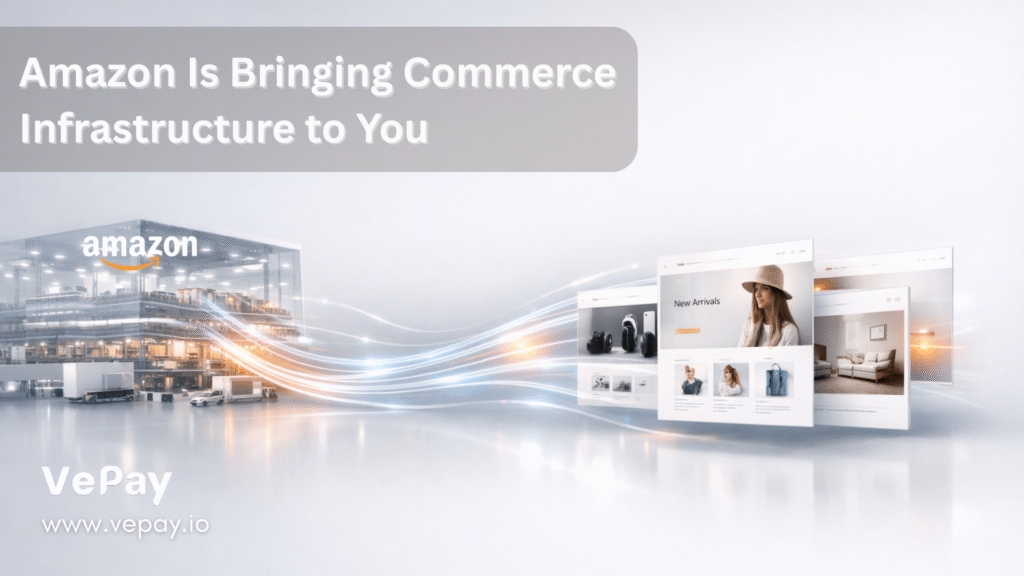
Amazon is expanding programs like Buy with Prime and Multi-Channel Fulfillment, allowing sellers to bring Amazon’s logistics and delivery experience directly to their own websites.
This is not just a feature update. It signals a deeper shift in how Amazon positions itself in the eCommerce ecosystem.
The Big Shift: Amazon Beyond Amazon
Traditionally, Amazon operated as a closed ecosystem.
Customers came to Amazon.
Sellers operated within Amazon.
Transactions stayed inside the platform.
Now Amazon is experimenting with a different model.
Sellers can integrate Amazon’s fulfillment and delivery capabilities into their own websites, enabling:
• Prime-style fast delivery outside Amazon
• Amazon-managed logistics for DTC orders
• A familiar checkout and delivery experience for customers
In some tests, customers don’t even need to leave the seller’s website to benefit from Amazon’s infrastructure.
This flips the traditional model.
Instead of sellers going to Amazon, Amazon is coming to the seller.
Why This Matters More Than It Seems
At first glance, this might look like just another logistics solution. But the implications are much bigger.
For years, sellers faced a core limitation:
You could either scale on Amazon or build your own brand ecosystem. Doing both effectively was difficult.
Now, Amazon is trying to bridge that gap.
This creates a new hybrid model where sellers can:
• Use Amazon for fulfillment
• Build their own brand presence
• Capture traffic outside the marketplace
• Maintain better control over customer experience
This is a significant evolution in how eCommerce infrastructure works.
What This Means for Sellers
This shift opens up new opportunities, but also raises important strategic questions.
1. You Can Build Beyond Amazon Without Losing Speed
One of the biggest challenges for DTC brands has always been logistics.
Customers expect fast delivery. Amazon set that expectation.
Now, sellers can potentially offer:
• Fast, reliable delivery on their own website
• A checkout experience customers trust
• Reduced operational complexity
This lowers the barrier to building a strong direct-to-consumer channel.
2. Customer Ownership Becomes More Realistic
On Amazon, customer relationships are limited.
You don’t fully control:
• customer data
• remarketing opportunities
• brand experience
With this new model, sellers can start to:
• build direct customer relationships
• create stronger brand loyalty
• control the buying journey
However, it is still important to note that Amazon remains part of the infrastructure, so full independence is not guaranteed.
3. Amazon Is Expanding Its Role in eCommerce
This move shows that Amazon is no longer just a marketplace.
It is becoming:
• a logistics provider
• a checkout and conversion engine
• an infrastructure layer for eCommerce
This puts Amazon in more direct competition with platforms like Shopify, not just other marketplaces.
The Strategic Trade-Off Still Exists
While this shift creates opportunity, it does not remove trade-offs entirely.
Sellers should consider:
• reliance on Amazon’s fulfillment network
• cost structures associated with Prime fulfillment
• how much control Amazon retains over the experience
In other words, while you gain flexibility, you are still building on Amazon’s infrastructure.
The relationship becomes more complex, not necessarily more independent.
A New Hybrid Strategy for Sellers
The most interesting outcome of this shift is the emergence of a hybrid selling model.
Instead of choosing between Amazon and DTC, sellers can combine both.
A potential strategy could look like this:
• Use Amazon marketplace for discovery and scale
• Use your own website for brand building and repeat purchases
• Use Amazon fulfillment to power both channels
This approach allows sellers to leverage the strengths of each system.
What Sellers Should Be Thinking About Right Now
This shift is still evolving, but it’s worth preparing early.
Sellers should start evaluating:
• whether a DTC channel fits their brand
• how fulfillment strategy impacts customer experience
• the role Amazon will play in their long-term business
It is not about moving away from Amazon.
It is about understanding how Amazon is changing its role in your business.
The Bigger Picture
Amazon’s move into powering external commerce reflects a broader trend.
Large platforms are no longer just destinations. They are becoming infrastructure.
We are seeing:
• marketplaces expanding into services
• logistics becoming a competitive advantage
• ecosystems becoming more interconnected
Amazon is positioning itself at the center of this shift.
Final Thoughts
For years, sellers have built businesses either inside Amazon or outside of it.
That distinction is starting to blur.
Amazon is no longer just where customers shop.
It is becoming part of how commerce happens everywhere.
For sellers, this creates both opportunity and complexity.
Those who understand how to leverage this hybrid model early may gain a significant advantage as the eCommerce landscape continues to evolve.