
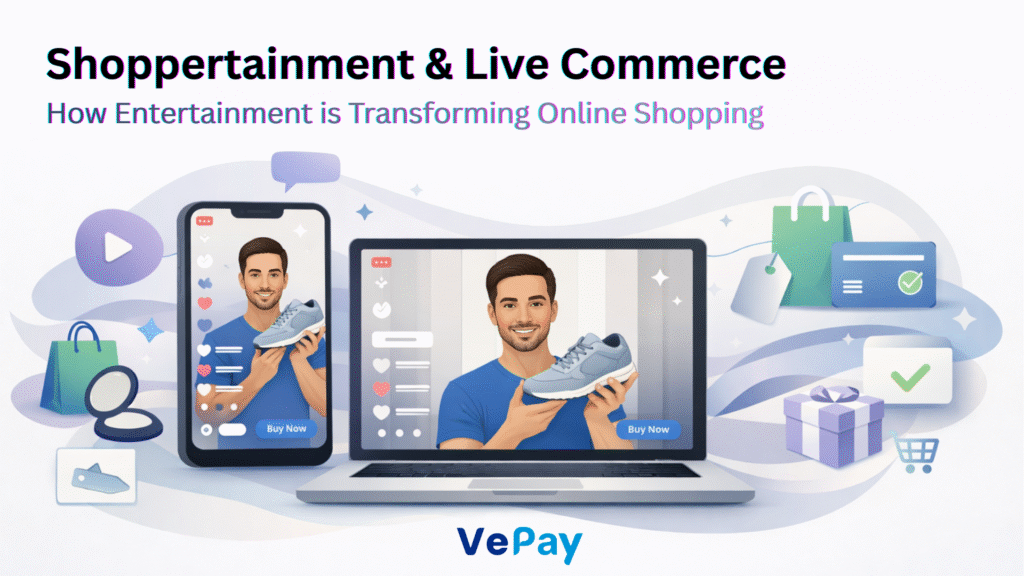
Imagine a small shop owner hosting a live video where she demos her best-selling gadget with humor, answers audience questions on the spot, and suddenly flashes an exclusive deal – all while viewers watch from home. Viewers don’t just see a product; they’re part of an interactive show. This is Shoppertainment: shopping disguised as entertainment. It’s literally “entertainment with a direct line to your wallet”. Rather than just scrolling a catalog, customers tune in to an experience – and can tap “Buy Now” without leaving the video. This mix of live performance, social interaction, and instant checkout is catching fire. In fact, nearly 60% of U.S. adults have watched a live shopping event and about 33% have bought something in one. The market is booming – one forecast puts U.S. live-commerce revenue around $68 billion by 2026 (roughly 5% of all e-commerce sales). In short, Shoppertainment is reshaping retail by blending live video, real-time engagement, and instant purchasing into a high-converting experience.
Why Shoppertainment is Exploding
Shoppertainment is a global phenomenon, but U.S. consumers are rapidly coming on board. Surveys find that tens of millions of Americans have tried live shopping: about 86 million Americans report buying via a live show, and roughly 12–33% of shoppers (depending on the survey) have made at least one purchase through a livestream. Adoption is growing: U.S. livestream sales jumped nearly 50% in 2025 to about $14.6 billion, and TikTok Shop alone drove over $100 million on Black Friday 2024 (triple the prior year). Conversion rates are also very high – well-run live events can convert 9–30% of viewers to buyers (versus 2–3% for typical e-commerce). Engagement is off the charts: live streams generate roughly 10× more comments than standard videos. All these trends reflect why analysts say live commerce is “rapidly transforming online retail”. Brands that embrace it now are tapping into a lucrative, fast-growing channel before it becomes truly mainstream.
Platforms Leading the Live-Commerce Wave
Several platforms are at the forefront of shoppertainment. TikTok Shop has emerged as a powerhouse, especially for younger shoppers. It uses algorithmic “For You” feeds to surface live shopping streams to people who aren’t even following the host. As a result, almost half of U.S. TikTok users now buy products through TikTok Shop. TikTok Shop accounts for about 20% of U.S. social-commerce sales and even drew 100,000 new customers for QVC in one quarter.
On Black Friday 2024 TikTok Shop ran over 30,000 livestreams and captured more than $100M in sales, proving its firepower.
Instagram Live Shopping (part of Meta’s shopping features) is also a key channel, especially in fashion and beauty. Although Instagram paused its dedicated live-shopping tools in 2023, many brands still use Instagram Live and Instagram Shops together. For example, 16–19% of U.S. adults have participated in Instagram/Facebook live shopping events. Influencers often demo products on Instagram Live and link to shoppable posts, merging video with browsing.
YouTube Shopping is another major player. YouTube Live now lets sellers tag products directly in-stream, and it integrates with Shopify to pull in a catalog. Because YouTube is the world’s largest video site, this gives sellers huge reach. Over half of U.S. brands already use YouTube Live for shopping. Its low barrier (you just need a camera and a channel) makes it easy to try out.
Amazon Live is Amazon’s take on live commerce. Sellers and influencers host shoppable streams right on Amazon’s website. About 30% of e-commerce brands report using Amazon Live to reach buyers. It’s particularly strong for categories like electronics and home goods, leveraging Amazon’s built-in buyer audience.
(By the way, Facebook Live is also widely used – 55% of U.S. sellers host shoppable streams there – but for brevity we’ll focus on the four big ones above.)
Why Shoppers Love It
Live commerce feels different from regular online shopping. Viewers describe it as fun, social, and authentic. In fact, studies show “entertainment/fun” is the top reason (42%) Americans watch live-shopping streams. They’re tuning in for the show: the demos, Q&A, games, and personalities. As one blogger put it, you’re “there for the show; the buying is almost incidental”. Hosts crack jokes, do giveaways or demos, and react in real time to comments. Meanwhile, seeing other viewers chime in (“OMG just bought one!”) builds social proof – a sort of tribal excitement that makes shopping contagious.
There’s also real urgency and ease: live streams often highlight limited-time deals or flash sales, which trigger FOMO (fear of missing out). Plus, the “Buy Now” button is right there; you don’t have to reload a new page or fill a cart – a tap is all it takes. This zero-friction checkout turbocharges impulse buys. Sellers report much higher add-to-cart and conversion rates live because of these dynamics. In short, shoppertainment turns shopping into an interactive performance. Consumers love that it brings back the human touch to e-commerce – they can ask questions, get immediate answers, and see products handled live, which builds trust. It’s like giving customers a (virtual) VIP seat at a launch party, rather than just a product listing on a webpage.
Getting Started: A Simple Seller’s Roadmap
New sellers can begin step-by-step. Keep it small and learn as you go. For example:
- Pick 5–10 products to feature. Start with your bestsellers or a themed selection. Shopify advises limiting the number of items so the stream stays focused.
- Set a date/time. Schedule when most of your audience is free (maybe evening or weekend). For your first try, avoid clashing with major sale events (like Black Friday) to reduce risk.
- Plan the format. Decide if you’ll do a demo, tutorial, interview, or Q&A. Prepare a simple outline or script: e.g. introduce each product, demo it, answer anticipated questions, and drop any discount codes. Keeping the stream concise (20–30 minutes) is smart for a debut.
- Choose your platform. Decide where you’ll broadcast – TikTok, Instagram, YouTube, or even Amazon Live. Focus on one platform first (each has its own setup). For instance, on TikTok Shop you must have a seller account and products approved for live selling, while on YouTube Live you can simply go live from your channel.
- Promote your stream. Use your social media, email list, and any ads to announce the event in advance. Let people know when and where to tune in, what you’ll show, and what deals (if any) you’ll offer. A teaser post or story on Instagram/TikTok is a good reminder as the time approaches.
- Test your tech. Before going live, check your camera, microphone, lighting, and internet connection. A quiet room and a steady phone/tripod make a difference. Good audio and video quality keep viewers engaged.
During the stream, encourage engagement: ask viewers to comment, answer questions live, and run a quick giveaway or poll. Name-check people who buy or comment to make it interactive. End with a strong call-to-action (e.g. “Tap to buy this deal!”) and a reminder of any countdown sales. Afterward, review the replay: what questions did viewers ask? Where did people drop off? Use those insights to improve next time. Remember: even top influencers had to learn the ropes. Many experts say a “test and learn” approach is key. Start with a friendlier setting (maybe co-host with a local influencer for extra reach) and refine your style.
Real Results: Shoppertainment Success Stories
Brands of all sizes are seeing big wins with live selling. For example:
- Pacsun (apparel): When a micro-influencer (with just 5,000 followers) did a TikTok Shop stream featuring Pacsun jeans, the effect was astonishing: 11,000 pairs of denim sold in 48 hours. By the end of 2024 Pacsun had logged $20 million in TikTok Shop sales off such viral moments.
- Kiehl’s (skincare): The heritage beauty brand ran a series of Instagram Live “open house” events for Ramadan, showcasing skincare tips. It carefully tailored content for the occasion and audience – and achieved an 8× return on investment.
- Three Ships Beauty (D2C beauty): This small skincare brand tried a one-hour stream using a tool (Livescale). In that first event they garnered over 350 orders from high-value customers. Livescale now counts them as a success story.
- Whatnot (live commerce platform): On the platform side, Whatnot is booming. Livestream sales on Whatnot are expected to top $6 billion in 2025, and on Black Friday 2025 shoppers spent over $75 million via Whatnot streams (3× year-ago). It shows even niche collectors and hobbyists are flocking to live shopping.
These examples prove that whether you’re a niche startup or a national brand, the blend of live video and shopping can pay off. By leaning into authenticity and excitement, sellers convert viewers into buyers in real time.
The Takeaway: Dive In with Confidence
Shoppertainment is more than a trend. It’s an evolution of e-commerce for the social media age. The entry barrier is low: with a smartphone and a plan, you can try a live shopping event today. Experts advise start small and iterate. Run a short live stream around a new launch or a holiday, learn from viewer feedback, and steadily build your skills. Partnering with a creator or influencer can help amplify your reach from day one.
Consumers have shown they love the fun, interactive nature of live commerce. As one strategist puts it, younger shoppers in particular ”experience two-way dialogue, moved by new experiences… Shoppertainment is an organic next step for how consumers are already shopping”. So why not jump in? The tools (from TikTok Shop to Instagram Live to simple ecommerce plugins) are there and accessible. By blending creativity with your products, you can tap into this dynamic space. Who knows your next live stream could be the start of a spectacular new revenue channel.
Sources: Industry research and news reports from 2025–2026 (Savings.com, eMarketer, Shopify, Business Insider, and others)